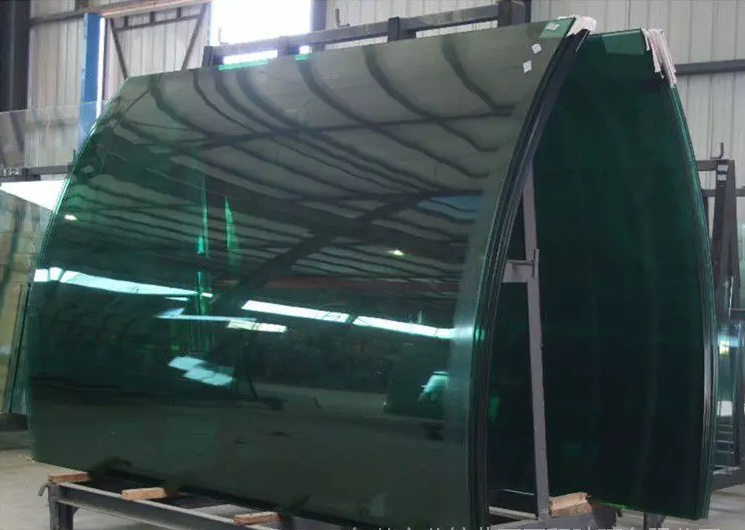
How to Actually Preheat Wide-Format Low-E Glass Without the Headaches
If you’re trying to preheat Low-E glass on a massive scale—we’re talking widths over 3 meters—you quickly realize that standard lamps just don’t work. You end up with these annoying cold spots where the shorter lamps overlap, and in this business, uneven heat is a recipe for disaster. That’s why we build custom, ultra-long infrared units. One continuous stretch of heat. No gaps, no overlaps, just a smooth, steady temperature across the whole sheet.
Why the gold coating matters
Here is the tricky part: Low-E glass is literally designed to bounce infrared radiation away. If you use a basic clear quartz lamp, a huge chunk of that energy just hits the glass and bounces right back into the tube. It’s like trying to heat a room with a mirror in front of the heater. The filament gets way too hot, stresses out, and burns out way sooner than it should. We fix this by adding a gold coating to the quartz. It sounds fancy, but it’s practical. The coating pushes the shorter wavelengths back toward the filament and lets the specific heat the glass can actually absorb pass through. It keeps the lamp from killing itself and makes the whole process much more efficient.
The struggle of going 3+ meters
Building a lamp this long is a mechanical nightmare if you aren’t careful. Quartz is brittle. If it sags even a little bit under its own weight, it can snap. To stop that from happening, we don’t just “mount” them; we use reinforced brackets and very specific spacing to keep everything rigid. Then there’s the power. You can’t just crank up the voltage and hope for the best. If you do, you’ll get voltage drops along the line, and your heat won’t be even. We spend a lot of time calculating the wire gauge and current draw so the heat density is exactly the same at the end of the tube as it is at the start.
A few things to watch out for
These units put out a massive amount of heat, which is great for the glass, but tough on your infrastructure. First, check your power supply. These lamps pull a lot of amperage, so make sure your electrical panels can actually handle the load without tripping. And please, look at your cooling. If your oven’s ambient temperature climbs too high, you risk frying your lamp sockets. We always suggest using high-temp wiring. It’s a small detail, but it’s the difference between a smooth operation and having your connections melt during a full-load cycle.