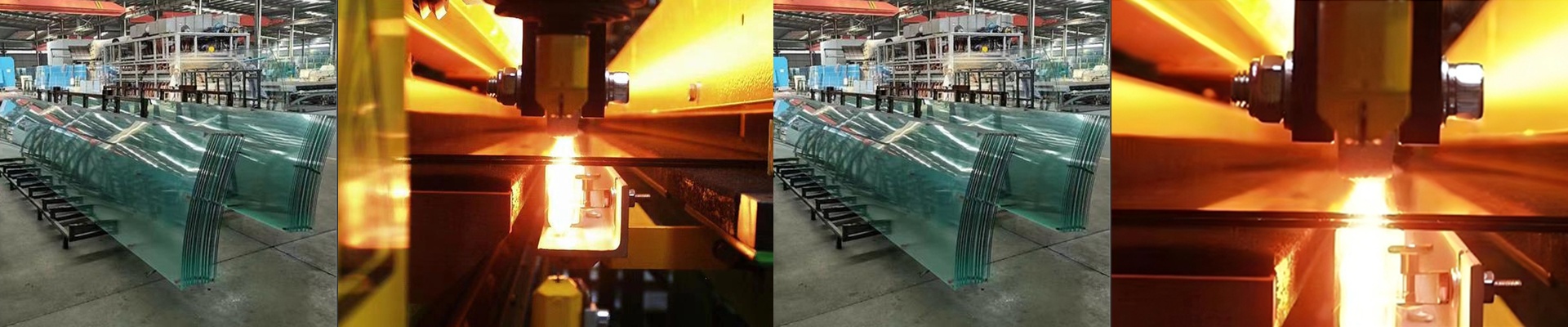

On the mirror line, the cutter lives and dies by timing. It’s not waiting seconds—it’s waiting milliseconds for the heat to show up. When the heater drags its feet, the score goes shallow, the edges start to chip, and the whole batch takes the hit for one slow cycle. We built our mirror-cutting infrared heaters to kill that pause. What actually matters under the hood We run short-wave NIR quartz emitters, tuned for how glass absorbs heat. You get rapid surface heating with minimal convection, so the thermal field stays tight. It hits set temperature fast and holds steady. On mirror glass, that means the scoring temperature stays consistent across the width—so the diamond wheel cuts clean, and the mirror backing stays intact. The units are 230/400 V, fit standard mounting footprints, and use industrial connectors so a swap-in replacement is straightforward. Here’s why it works where it matters: mirror cutting is all about rhythm. If the heater can’t hit temperature on demand, the line has to buffer glass or back off the speed to avoid breakouts. Our NIR heaters cut warm-up time and keep the thermal profile stable, so the cutter can run at full stroke rate without chasing hot spots. The payoff is higher throughput, fewer edge defects, and less scrap from thermal stress. Energy use drops too, because the heater only draws when the process calls for it. A few practical notes. Installation only feels plug-and-play when the machine clearance, airflow, and reflector geometry line up with the unit. Keep the emitter face clean and aligned—even a little shadowing from nearby fixtures can create a cold band and give you uneven scoring. When you switch between low-iron, coated, or laminated mirrors, plan to re-check the focal distance by 10–15 mm. Emissivity shifts, and that changes how the glass takes the heat.