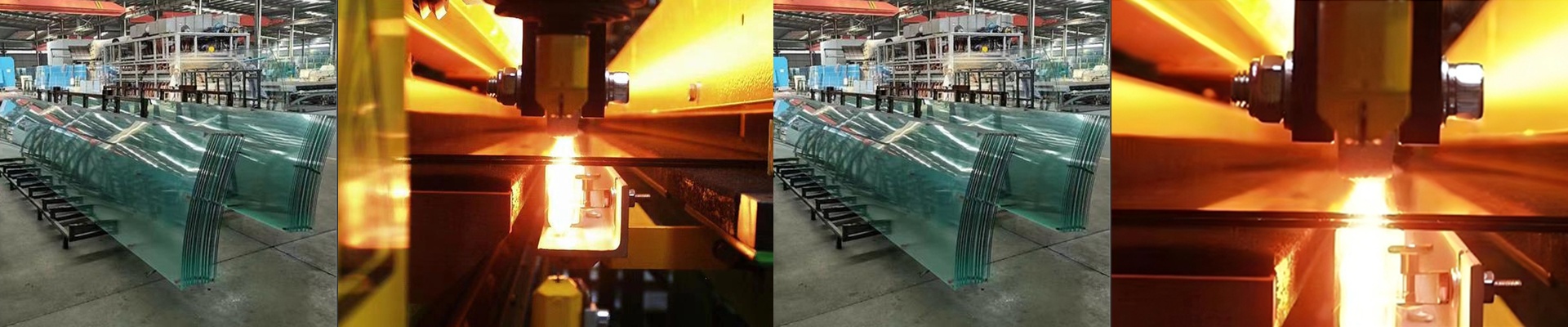
On the bending line, the furnace doors swing open and you’re instantly in a race against the clock. Glass moves from the heating chamber to the forming station, and every second the temperature drops, it shows up in the reject pile—optical distortion, shape drift, or a hairline fracture that only reveals itself later as failed tempering. When the heat profile is flat, the parts come off the line matching the drawing. When it’s uneven, you’re paying for scrap and rework.
What Matters Technically
Zoned heating for glass bending isn’t about hitting a single setpoint. It’s about building a repeatable thermal field across the entire glass surface. We set up each zone with independently controlled quartz or short-wave infrared elements, tuned to the glass emissivity and the soak profile the job needs. Power is sized to ramp fast without overshoot, and the control system holds zone-to-zone uniformity tight enough to keep thermal stress in check during the bend. That gives you predictable sag, consistent shape memory, and a stable path through stress relief before the glass ever reaches annealing.
Why It Works on the Floor
In a production shop, the payoff is straightforward. Tighter zone control cuts down edge chill and center overheat, so you spend less time chasing shape tolerance and more time shipping good parts. Cycle time drops because the heating curve is repeatable—fewer waits for the furnace to settle after each load change. Energy use falls because zones only pull what’s needed, and the elements hold steady over long runs. Fewer stress-induced failures mean less pain downstream in tempering and lamination, and a higher first-pass yield right on the bending line.
Things to Know
Zoned heating modules aren’t plug-and-play on every furnace. You need a clean interface for power, thermocouples, and interlocks, and you have to confirm your convection pattern and hearth design won’t fight the new zone plan. Expect a short integration window to dial in the profile for your glass thickness and coating stack. Once the profile is locked, the system will run, but it still needs periodic calibration to keep the thermal field where it should be.